Surfaces That Eliminate Tripping Hazards Permanently
Concrete Walkway Repair & Masonry in Ramona for cracked sidewalks, uneven surfaces, and deteriorated patios
Uneven concrete creates tripping hazards where sections have settled or lifted, leaving edges that catch feet and create liability concerns for property owners. Ramona Handyman repairs cracked sidewalks, walkways, and patios through methods that restore level surfaces and address the underlying causes of movement. You notice the difference immediately when walking surfaces no longer require careful navigation and water drains properly instead of pooling in sunken areas.
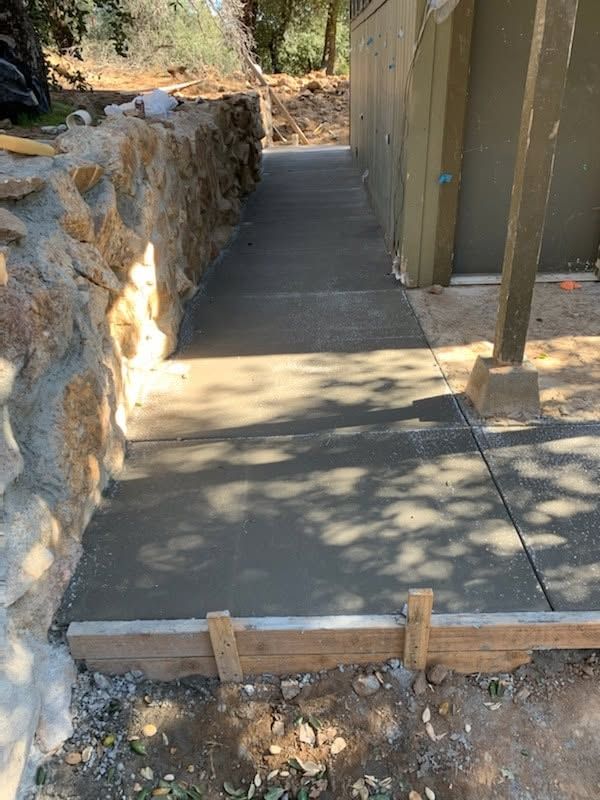
Concrete fails when soil beneath it erodes, compacts unevenly, or shifts due to root growth or water infiltration. Repair work involves stabilizing the base, removing damaged sections when necessary, and pouring new concrete that matches existing grades and finishes. Small masonry projects extend this work to include retaining walls, steps, and decorative elements that integrate with your exterior hardscape.
Arrange an on-site consultation to evaluate walkway conditions and discuss repair options.
What You Notice Once Concrete Work Is Finished
Repairs begin with assessing whether existing sections can be leveled through mudjacking or if removal and replacement provides a more durable solution. Mudjacking lifts sunken slabs by injecting material underneath to fill voids and raise the surface, which works when the concrete itself remains intact. Replacement becomes necessary when cracks have compromised structural integrity or when sections have broken into multiple pieces that no longer form a stable surface.
Completed repairs result in walkways where all sections sit at the same elevation, eliminating edges that create tripping risks. Water flows off surfaces toward drainage points rather than collecting in depressions, which prevents freeze-thaw damage in colder months and reduces slip hazards year-round. Durable workmanship means joints are properly cut and filled, edges are finished to prevent chipping, and the surface texture matches surrounding concrete for a continuous appearance.
Concrete repairs address surface and structural problems but do not resolve ongoing issues with soil movement, invasive roots, or inadequate drainage systems. If settling recurs after repairs, the underlying cause requires separate attention to achieve lasting results. Quality work focuses on repairing what is damaged while providing realistic expectations about long-term performance based on site conditions.
Common Questions About This Service
Property owners typically want to know what repair methods work best for different types of concrete damage and how to prevent future problems.
What determines whether concrete should be repaired or replaced?
You replace sections when cracks extend through the full thickness, when multiple pieces have separated, or when the surface has deteriorated beyond structural soundness. Leveling works for slabs that remain intact but have settled unevenly.
How does soil movement affect concrete walkways over time?
Soil compresses under weight, erodes from water flow, or expands with moisture changes, causing the concrete above to sink or heave. In the Greater Ramona Area, clay soils that shrink during dry periods and swell with rain contribute to uneven settling patterns.
What prevents new concrete from cracking immediately after installation?
Proper base preparation, adequate thickness for the intended load, correctly spaced control joints, and appropriate curing all reduce early cracking. Control joints create intentional weak points where concrete cracks in straight lines rather than randomly across the surface.
When is mudjacking a better option than full replacement?
Mudjacking costs less and completes faster when the concrete itself remains structurally sound and only needs leveling. Replacement becomes necessary when the material has deteriorated or broken into pieces that cannot be stabilized through lifting alone.
How long should repaired concrete walkways last?
Properly installed concrete on stable base material lasts decades, with the finish surface requiring occasional resealing to prevent moisture intrusion. Lifespan depends on load exposure, freeze-thaw cycles, and whether underlying soil conditions remain stable.
Ramona Handyman provides honest assessments of concrete conditions and recommends solutions built to last based on your specific site conditions. Contact us for a free estimate to review your walkway or patio damage.